Cross Team Alignment
My Role
Sole Designer · Self-initiated scope
Scope
Design Systems · Cross-team Alignment · Documentation
Teams Involved
3 Engineering Teams · 3 PMs · Design Leads
Outcome
8+ modules unified · 0 design involvement for subsequent alignments
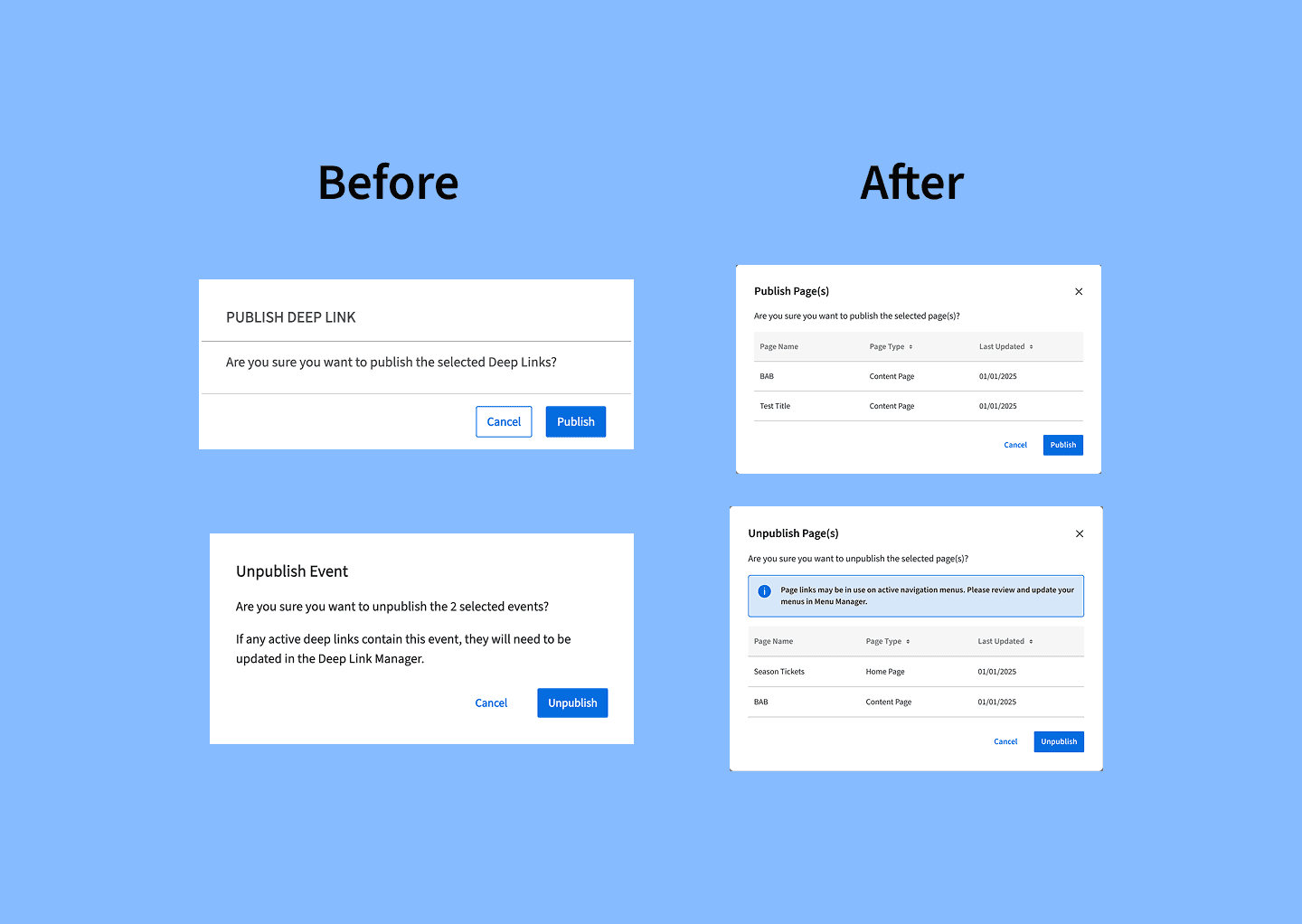
The Problem
8 modules. 8 ways to do the same thing.
The Critical Detail
This problem wasn't on anyone's roadmap. No PM had scoped it. No ticket existed for it. I identified it, scoped it, and drove alignment entirely off my own initiative, while maintaining my regular IC design responsibilities.
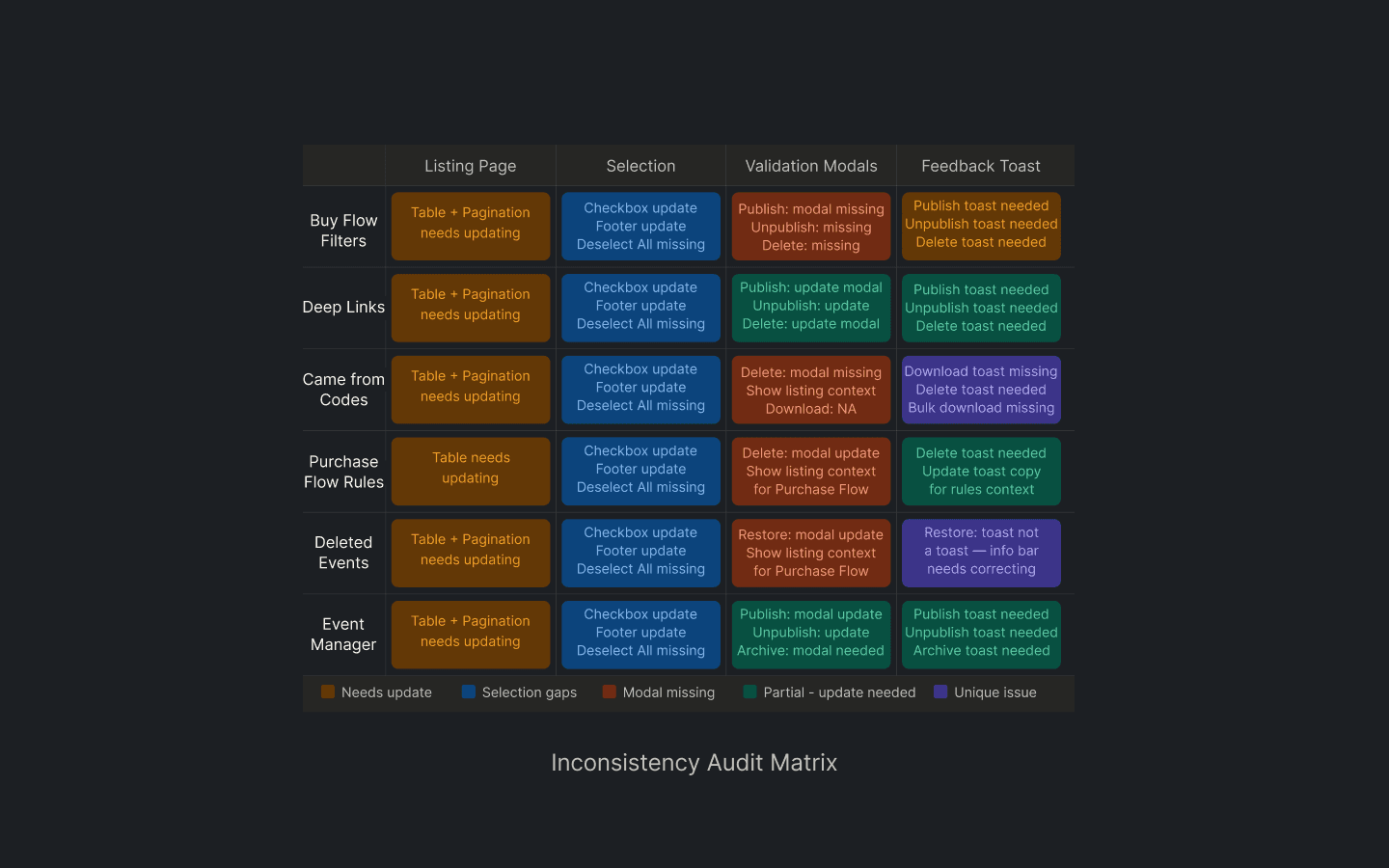
THE RESEARCH - HEURISTIC EVALUATION
Before designing anything, I needed to know what I was actually dealing with.
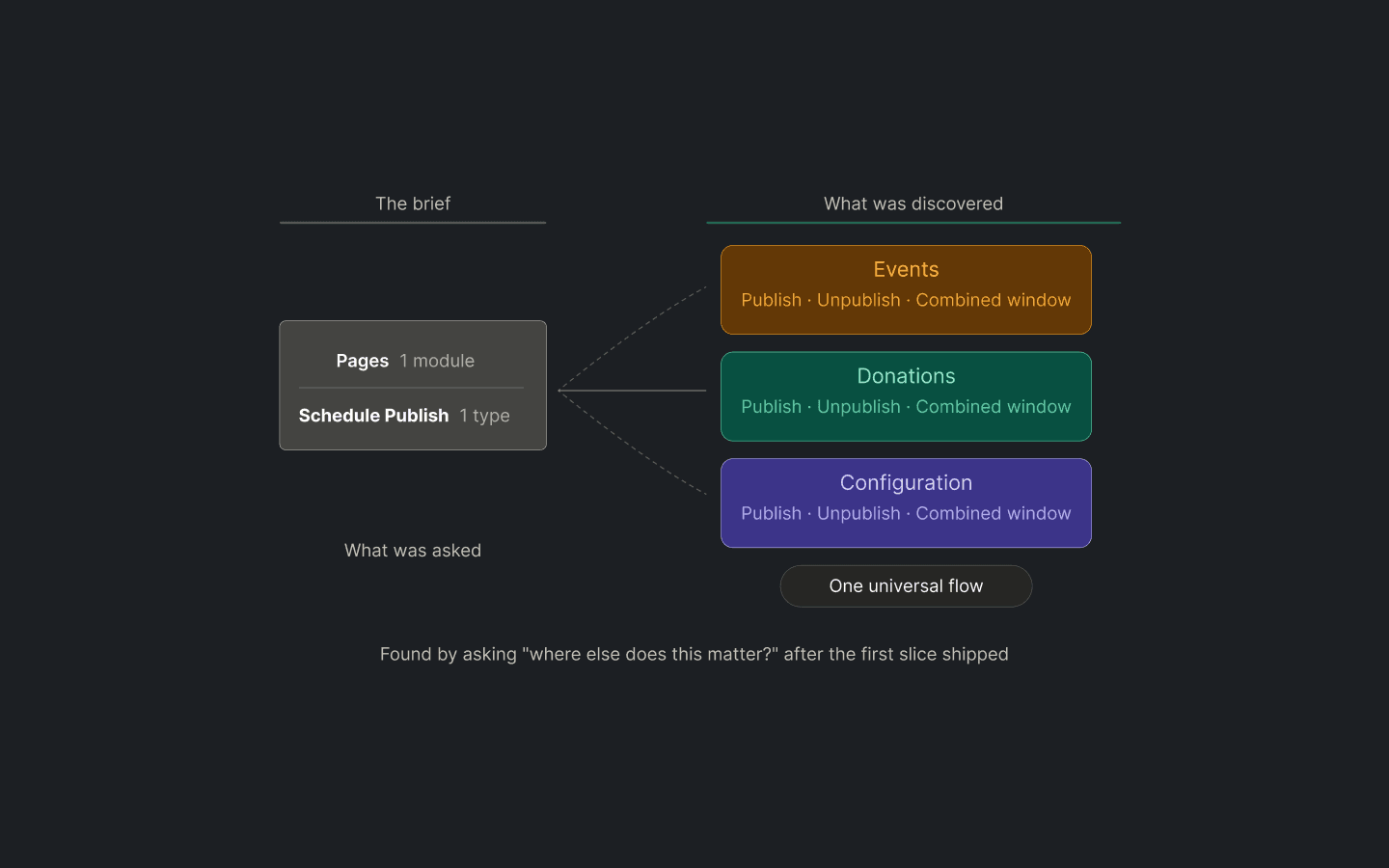
Key Finding
8 modules. 6 different interaction patterns for the same action. The heuristic evaluation changed the scope from fixing one module to establishing a standard for all of them. Without this step first, the solution would have been a local patch, not a system.
The Approach
Heuristic evaluation first. Solution second.
01
02
03
02
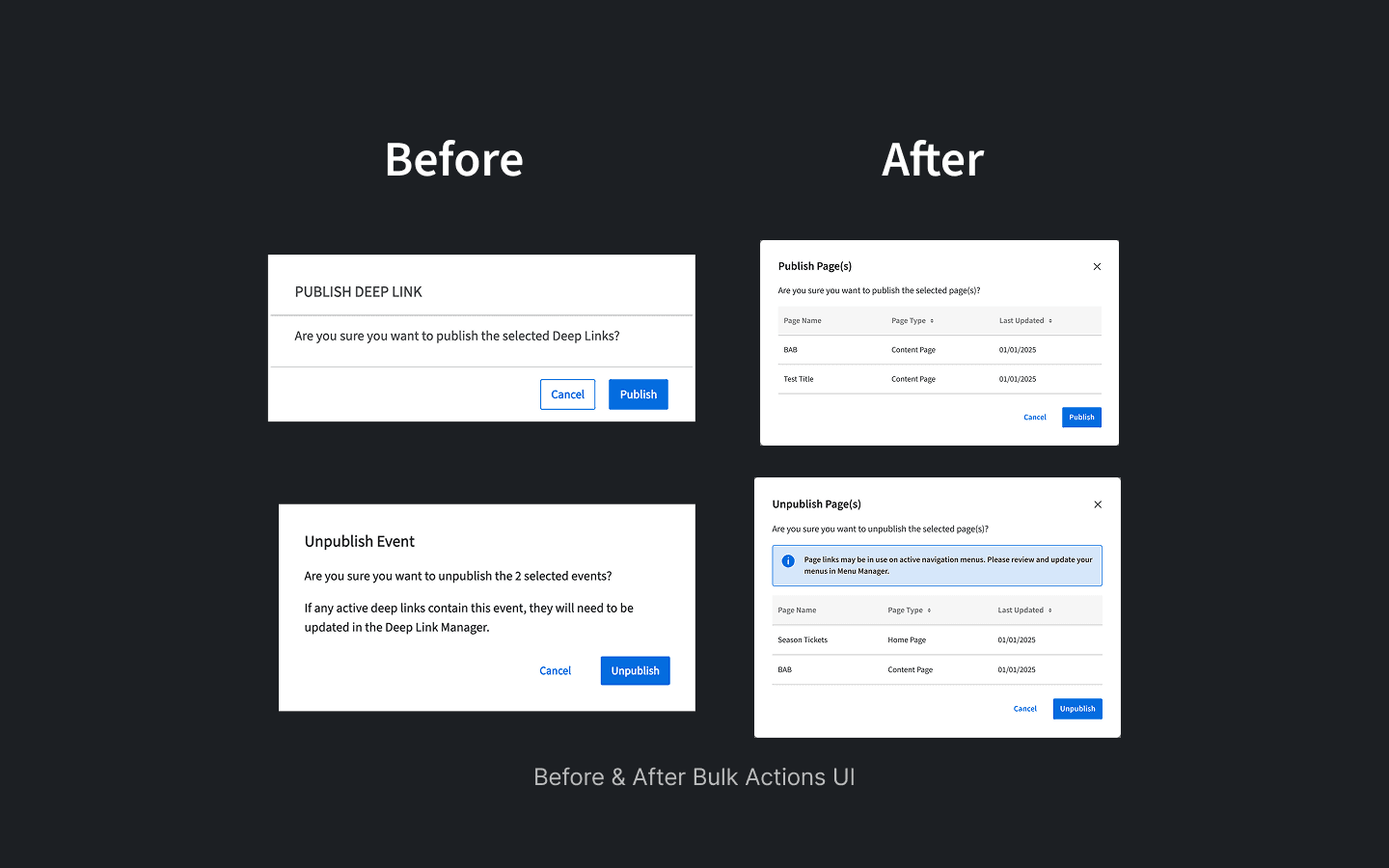
The Alignment Move
All three teams in the same room. No sequential briefings.
Why simultaneous
One version of the truth
Sequential briefings introduce drift. Each team's understanding of the agreed standard diverges slightly from the last, and those small divergences compound into real implementation inconsistencies. One session, one room, eliminates drift at the source.
Why effort estimates
Approval → prioritisation
When engineering effort is invisible in a design review, engineers say yes in principle but no in practice, the work never gets scheduled. Making effort visible changes the conversation. Teams can negotiate scope, not just approve it.
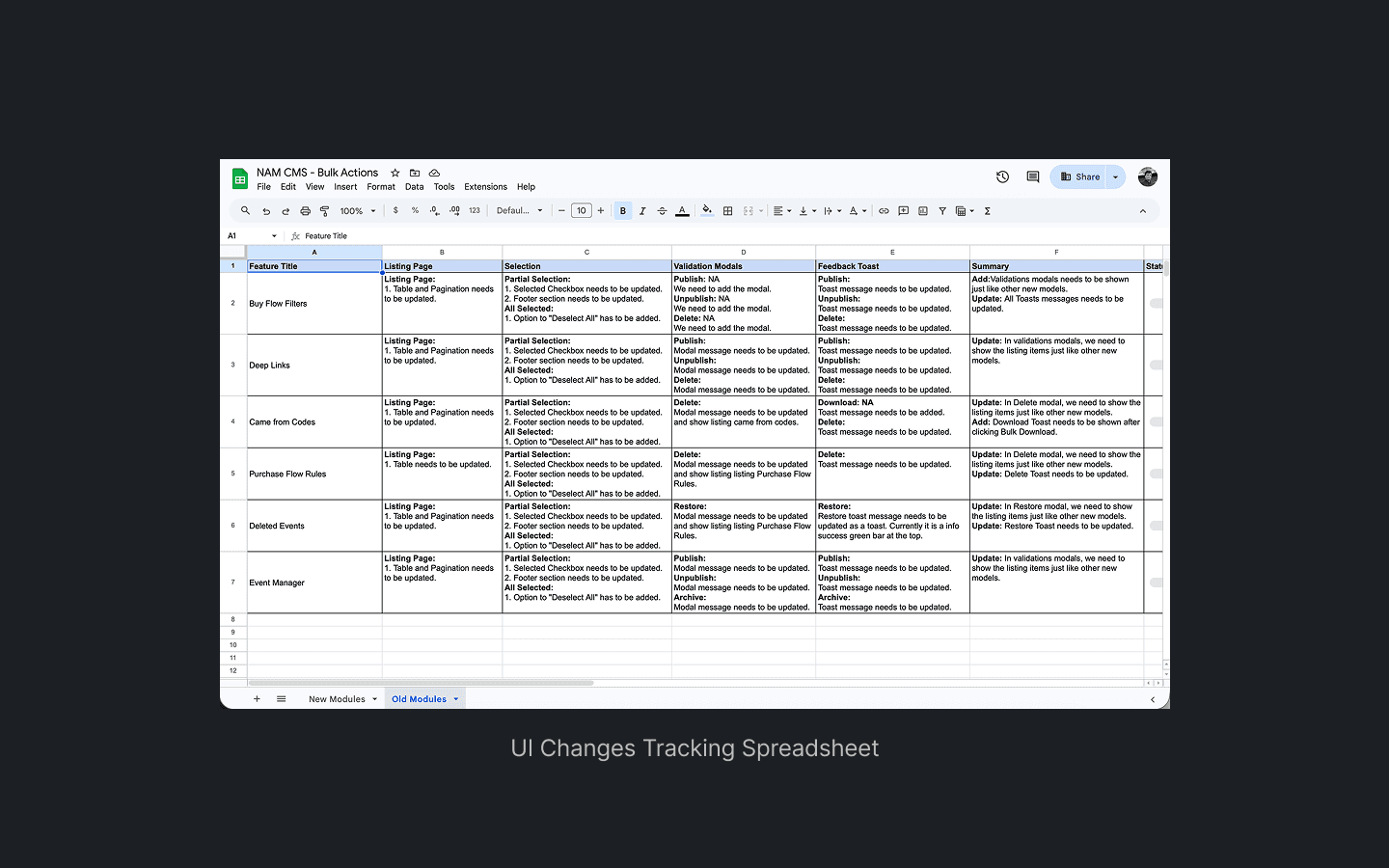
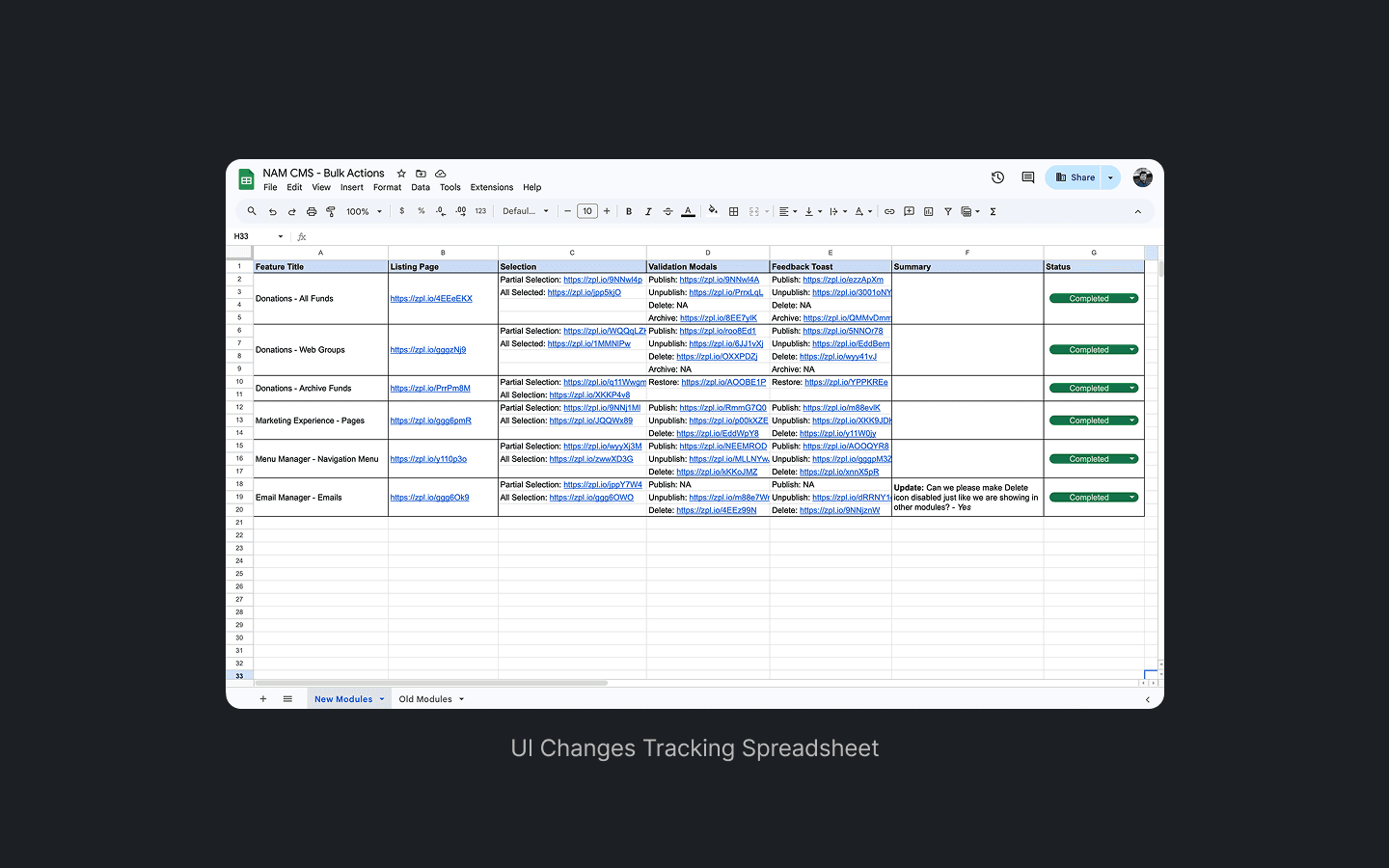
The Documentation Standard
Documentation that runs without the designer.
The moment that confirmed it worked
A PM I hadn't worked with used the bulk actions documentation to brief the Event Manager team, without looping me in. No questions. No follow-up. The documentation had replaced the designer as the source of truth.
The Result
The documentation ran itself.
Modules brought to a single consistent bulk actions standard across the product
Engineering teams coordinated in a single alignment session, no sequential briefings
Teams now using the bulk actions documentation as a self-sufficient reference standard
Design involvement required for subsequent module alignments after the standard was set