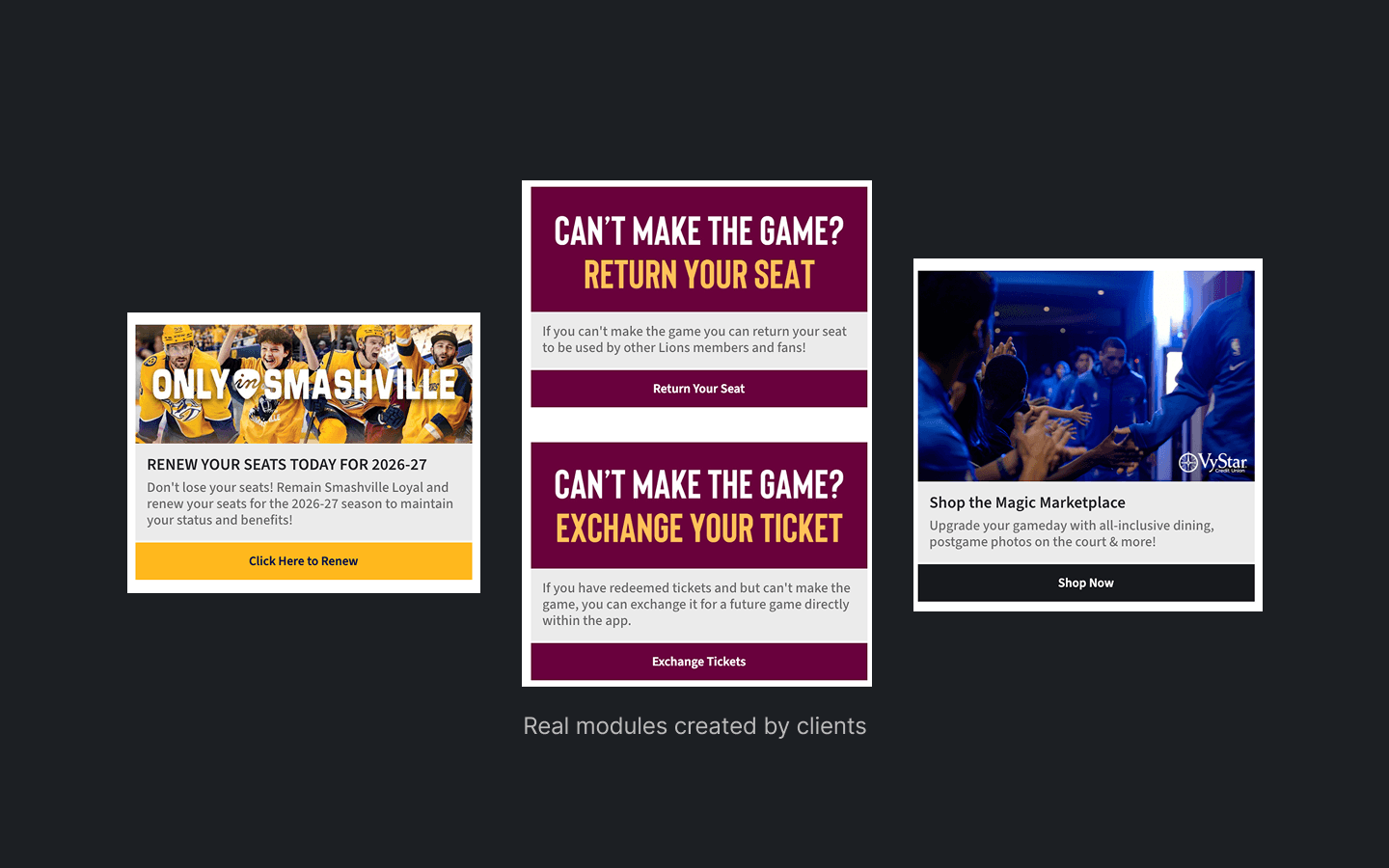
Giving 80+ enterprise clients direct control over their live content, without a single engineering ticket.
Client
Ticketmaster
Services
Product Design · UX Strategy · Enterprise CMS
Industries
Live Entertainment · Enterprise SaaS · Ticketing
Date
2025
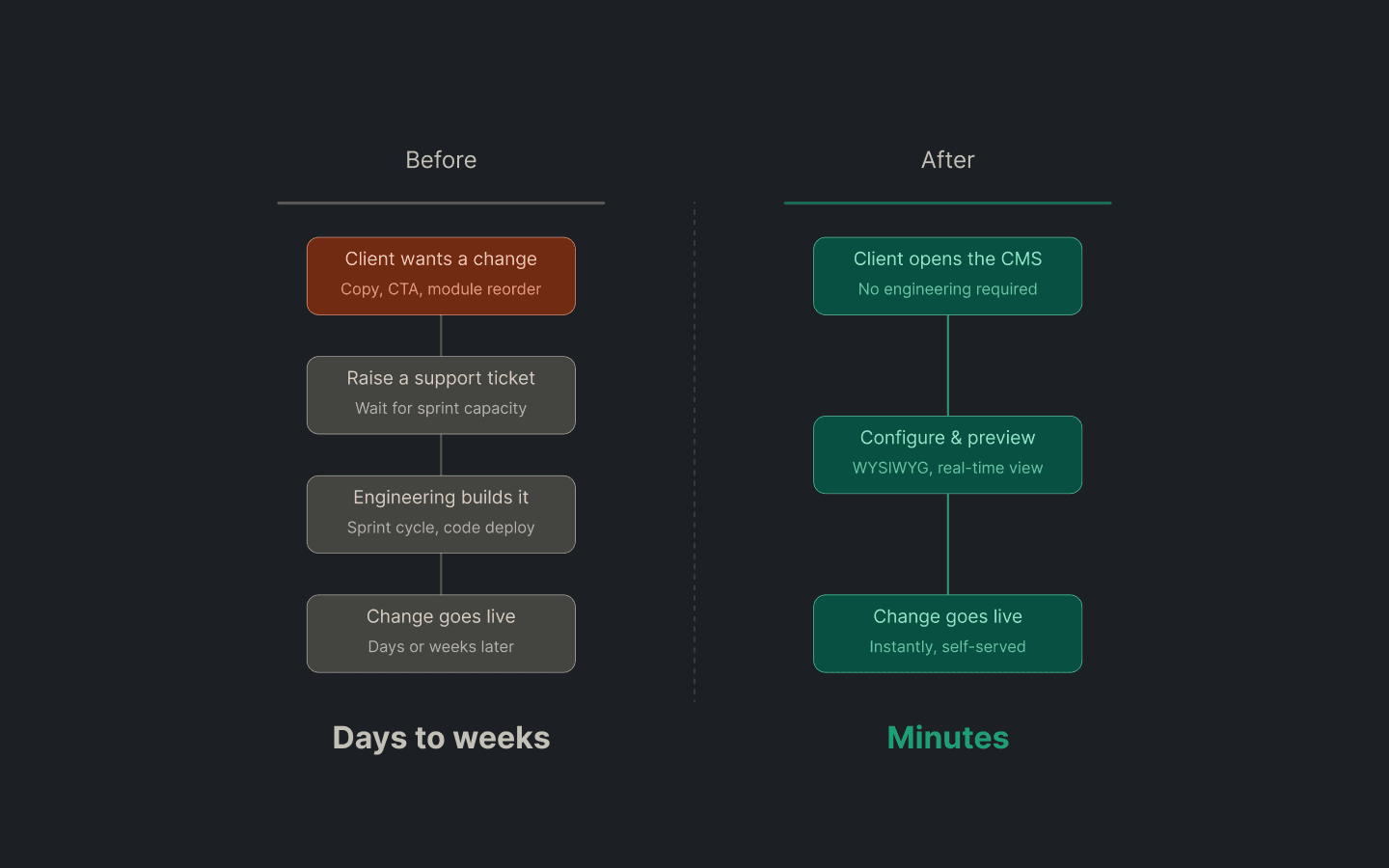
The old workflow forced every copy change, module reorder, or CTA swap through a support ticket, sprint capacity, and a wait. For event organizers on tight go-live windows, that dependency was a revenue problem, not just a workflow inconvenience.
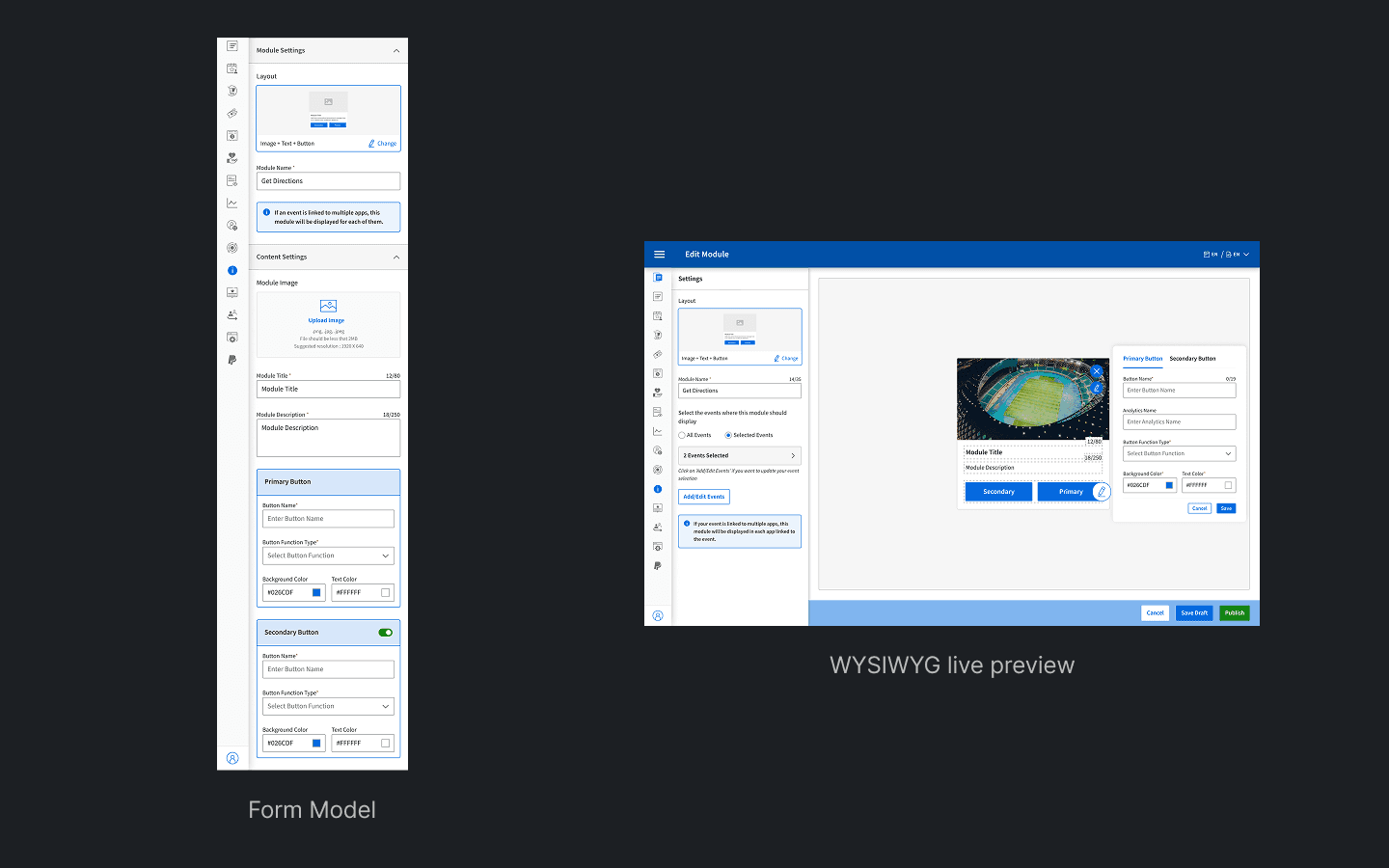
The central UX decision was WYSIWYG over forms. Two models were tested. Form-based config was abandoned because there was no way to visualise the output, it asked clients to imagine the result. A live preview removes that cognitive step entirely. The form model asks you to imagine. WYSIWYG removes imagination from the equation. The second decision: modular guardrails over open customisation. Unbounded flexibility produces unbounded support requests.
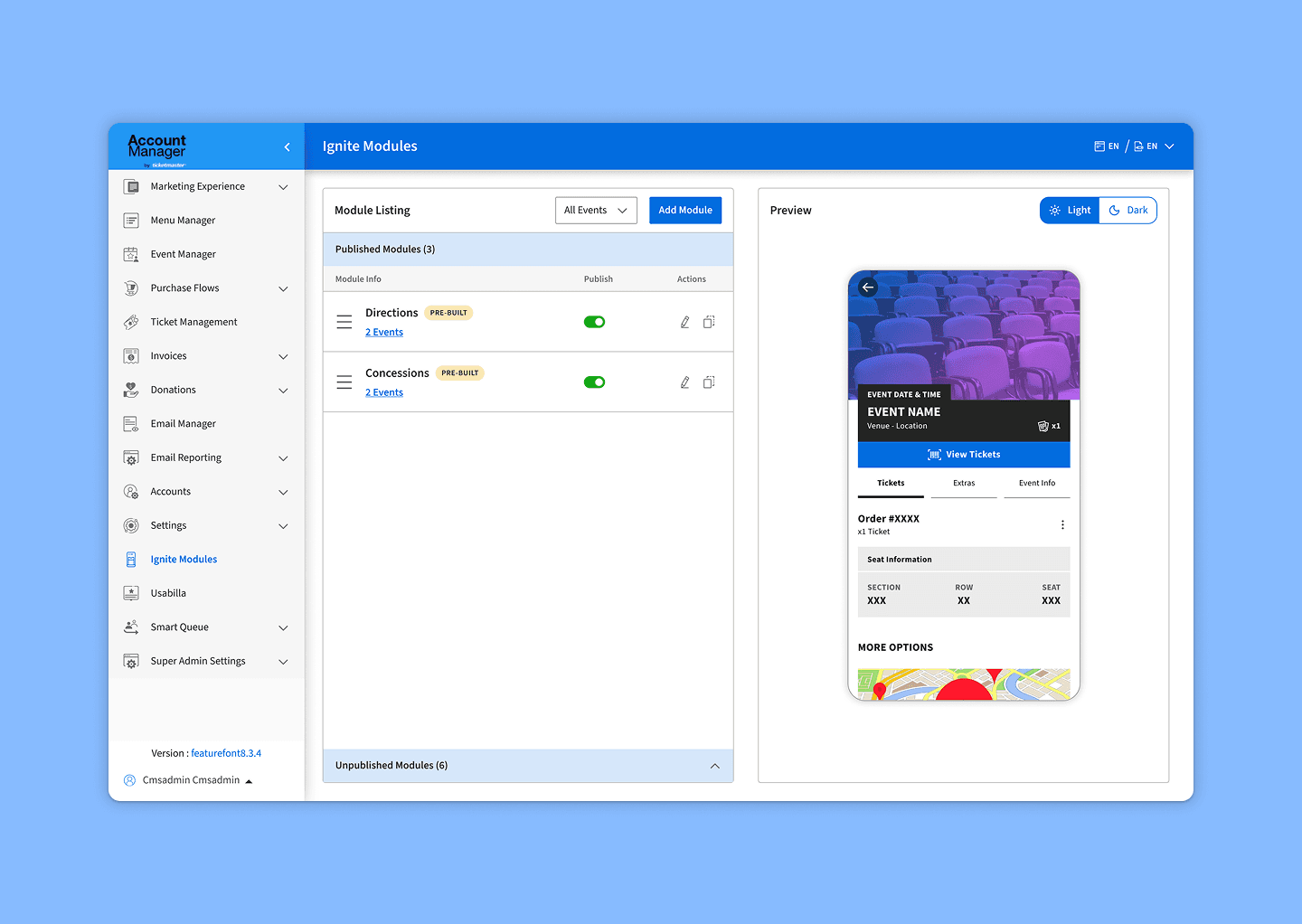
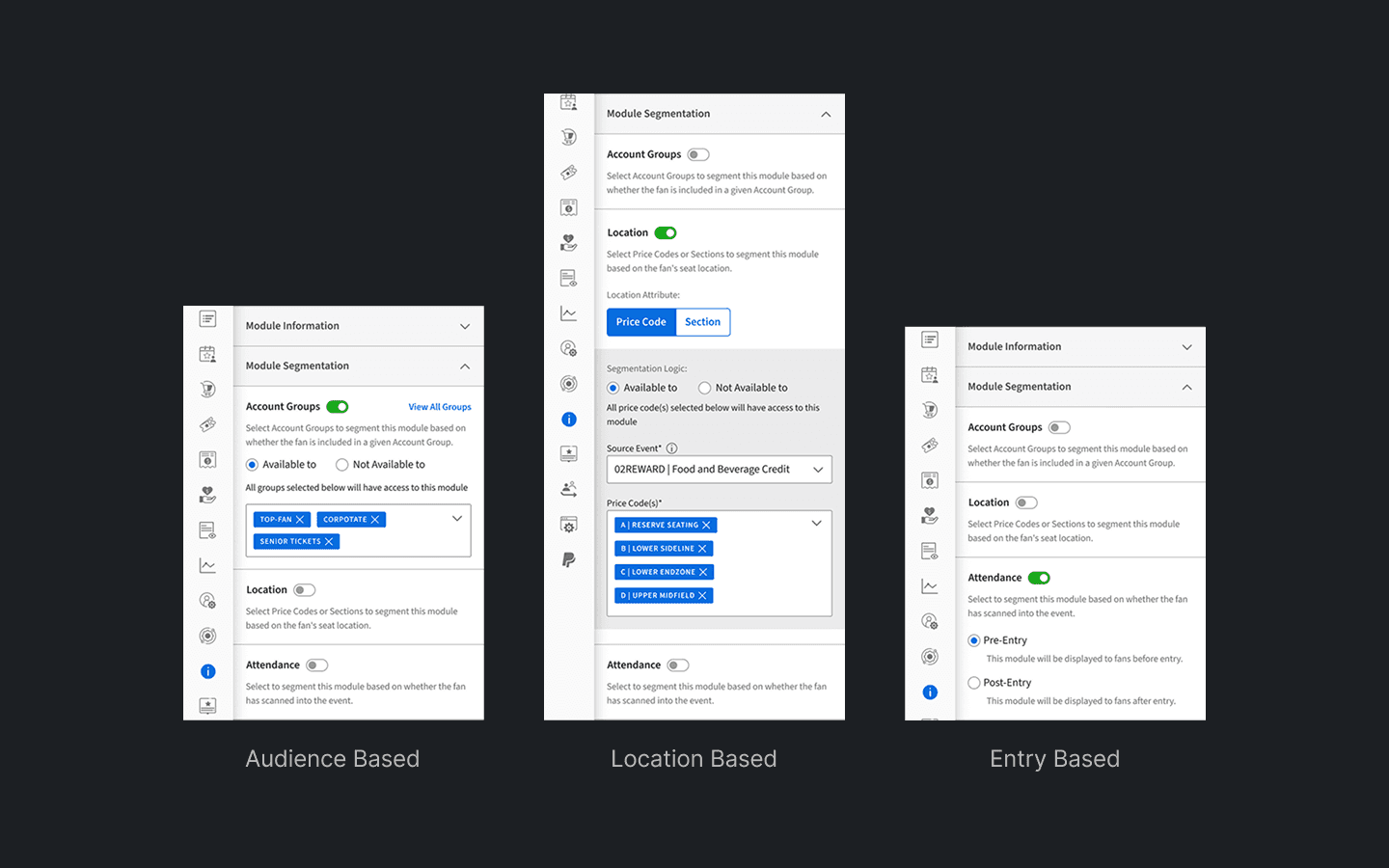
Phase 2 extended the system clients already knew, new capabilities without rebuilding what existed. Audience segmentation by entry status, location-based segmentation by Price Code and Section, and account group-based segmentation all landed on the same component architecture. The hardest problem: make segmentation invisible if unused, intuitive when needed.
Designs delivered in 10 days. Clients didn't need a tutorial, the first interaction was the onboarding. The system was recognised at VP Leadership level and featured at the Global Design Townhall.